Paycheck After Taxes: Estimate Salary Take-Home Pay
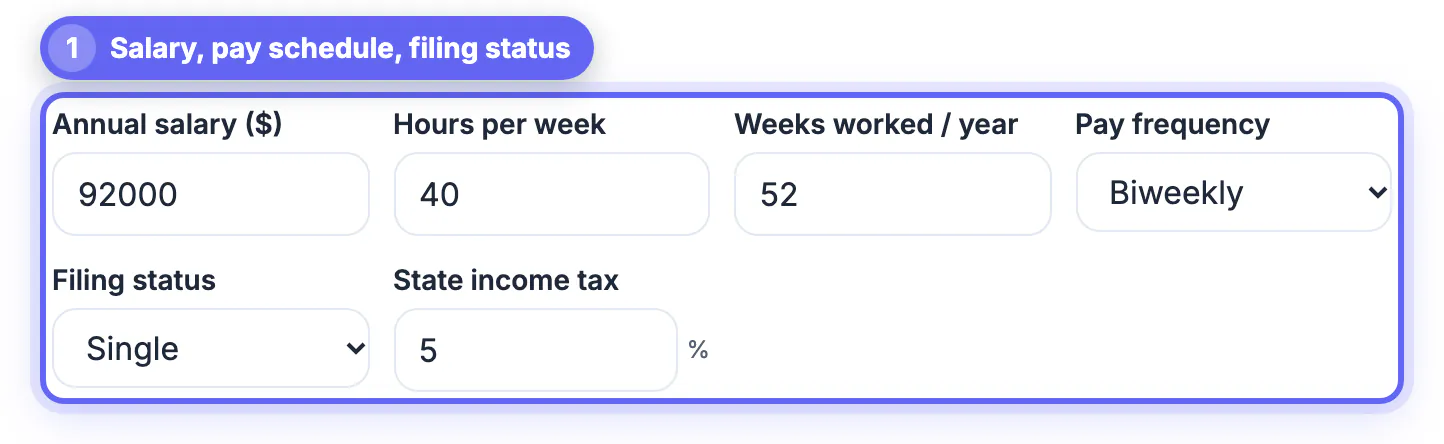
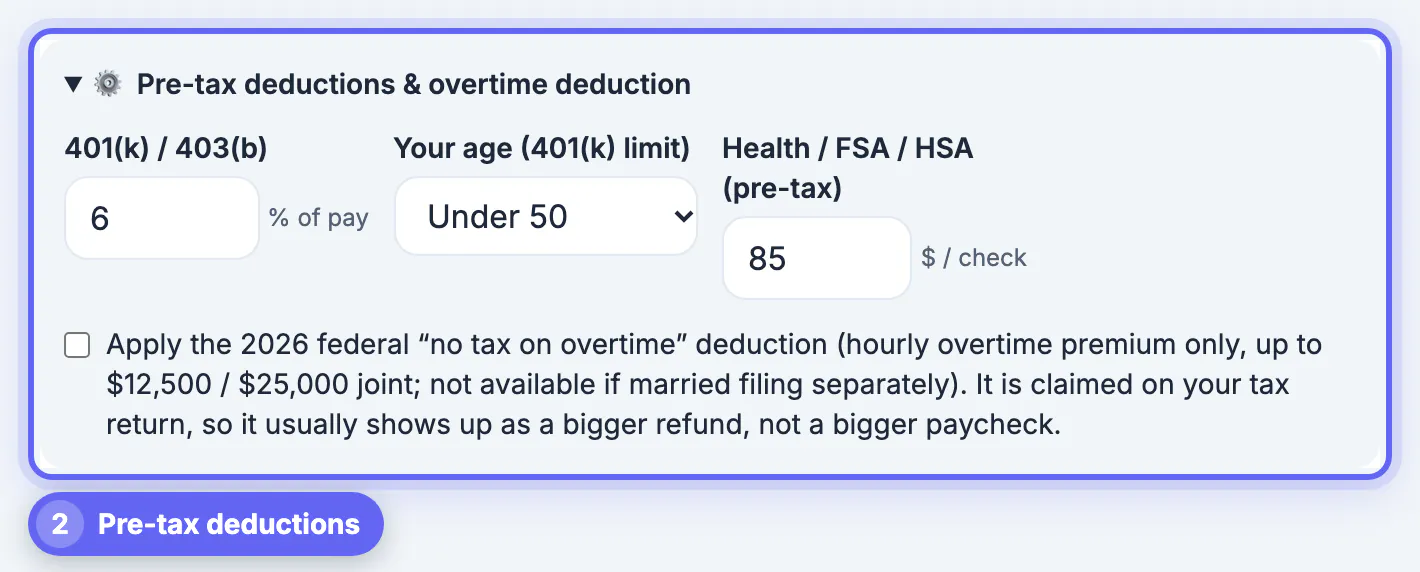
To estimate your paycheck after taxes, start from the gross amount per pay period, subtract pre-tax deductions such as a 401(k) and health premiums, then subtract federal income tax, Social Security, Medicare and any state tax. For a single filer earning $92,000 paid biweekly with a 6% 401(k), $85 per check for health coverage and a flat 5% state estimate, the GrabCast Paycheck & Salary Calculator shows $2,441.47 take-home per check out of $3,538.46 gross, or $63,478.17 a year. This guide walks through that example line by line, explains what each deduction is based on for tax year 2026, and shows where a quick estimate like this will differ from the stub your employer actually prints. It is an estimate, not tax advice.
💰 Try the Paycheck & Salary Calculator now — freeOpen →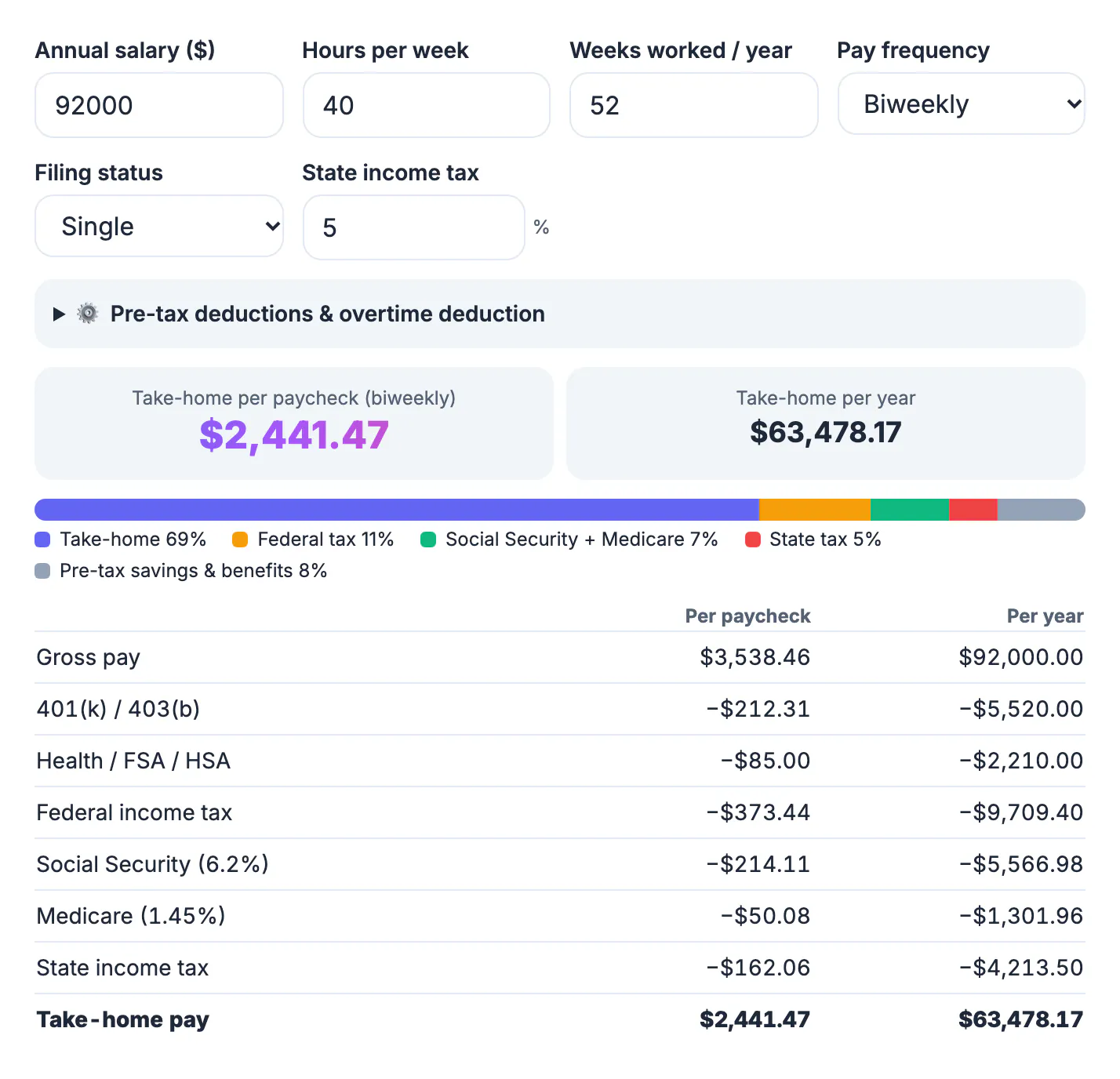
Offer letters, raises and job listings quote an annual gross figure, but rent, car payments and savings come out of the net deposit that lands every two weeks. In the example below, roughly 31 cents of every gross dollar never reaches the bank account: some of it goes to retirement and health coverage you chose, and the rest goes to federal, payroll and state taxes. Knowing the split before you sign a lease or accept an offer keeps you from budgeting with money you will never see, and it shows which levers, like a larger 401(k) contribution, actually change the deposit and by how much.
Paycheck after taxes on a $92,000 salary, line by line
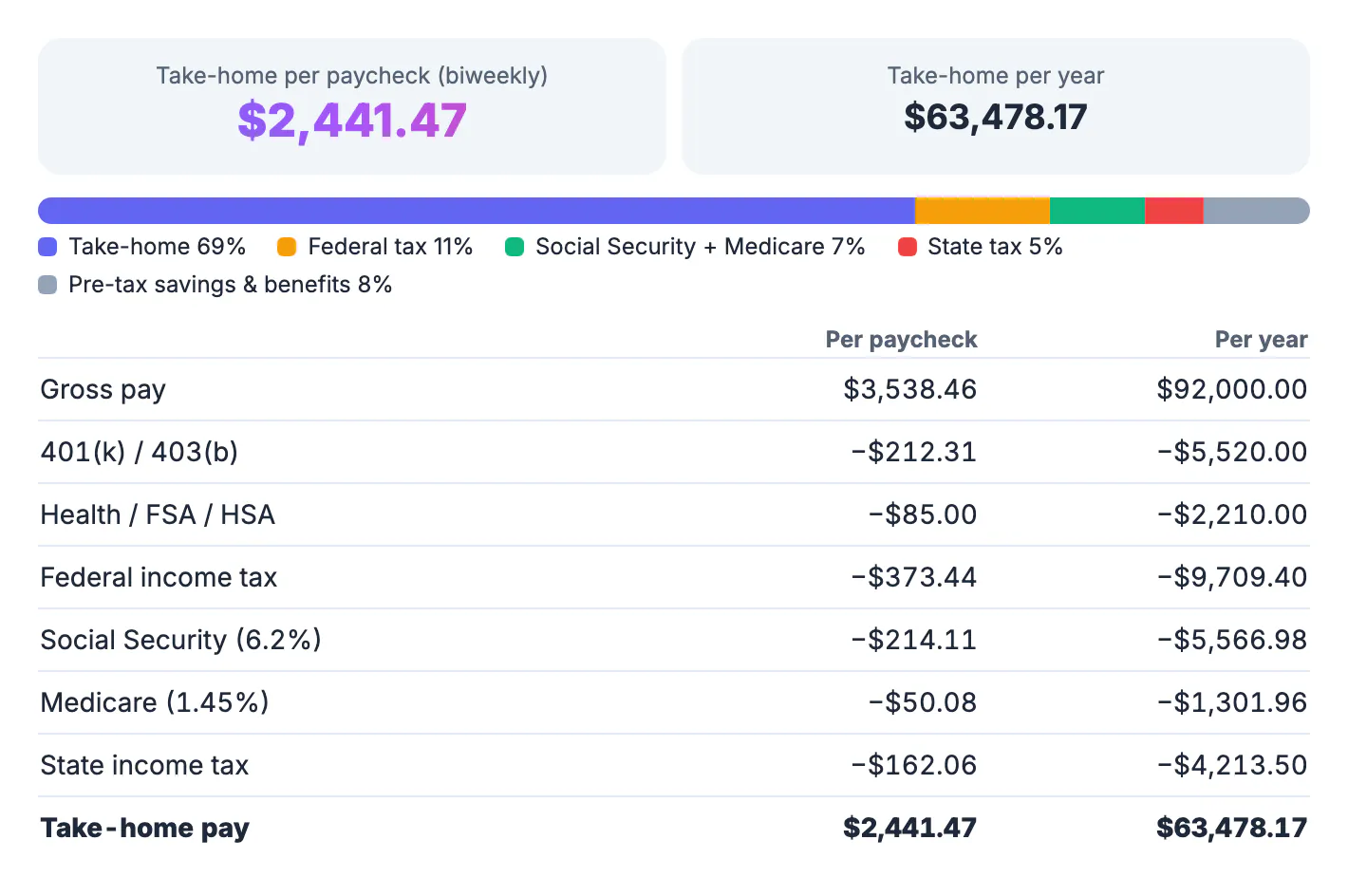
Here is the full biweekly breakdown the calculator produces for this salaried, single filer. Gross pay is $92,000 divided by 26 paychecks.
- Gross pay: $3,538.46 per check, $92,000.00 per year.
- 401(k) at 6% of pay: minus $212.31 per check, $5,520.00 per year.
- Health, FSA or HSA premium: minus $85.00 per check, $2,210.00 per year.
- Federal income tax: minus $373.44 per check, $9,709.40 per year.
- Social Security at 6.2%: minus $214.11 per check, $5,566.98 per year.
- Medicare at 1.45%: minus $50.08 per check, $1,301.96 per year.
- State income tax at a flat 5% estimate: minus $162.06 per check, $4,213.50 per year.
- Take-home pay: $2,441.47 per check, $63,478.17 per year.
The colored bar above the table sums it up: 69% take-home, 11% federal tax, 7% Social Security and Medicare, 5% state tax and 8% pre-tax savings and benefits. The 8% is still your money; it just goes to a retirement account and an insurance plan instead of checking.
Once you know take-home pay, this housing affordability guide and this savings guide show where it can go.
How the federal tax figure is estimated for 2026
The calculator works on a full year first and then divides by the number of paychecks. It uses the 2026 brackets and standard deductions the tool cites from IRS Revenue Procedure 2025-32: $16,100 for single filers, $32,200 for married filing jointly and $24,150 for head of household.
- Wages for federal tax: $92,000 minus the $5,520 401(k) and $2,210 of pre-tax health premiums, which leaves $84,270.
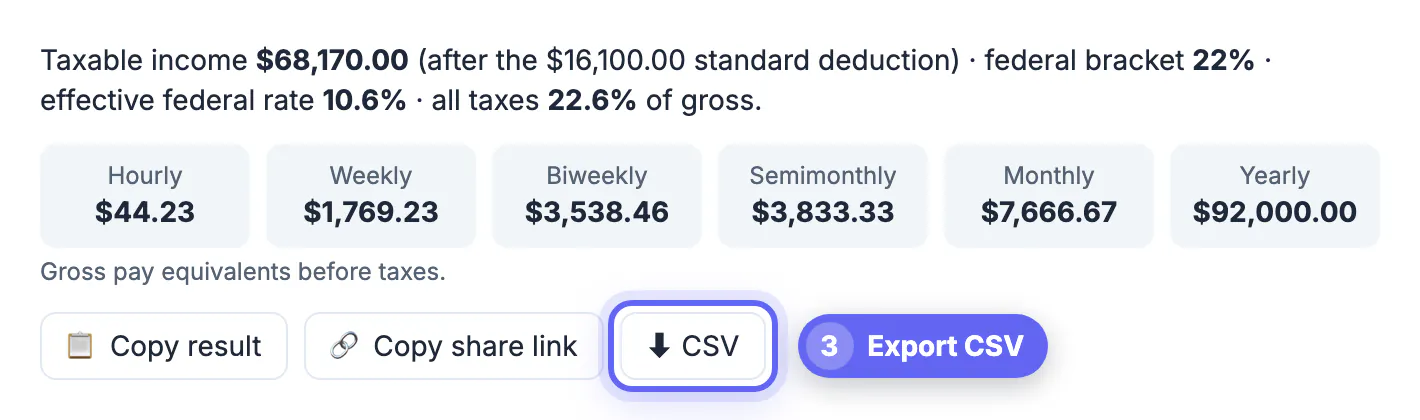
- Taxable income: $84,270 minus the $16,100 standard deduction, or $68,170.
- Tax: 10% on the first $12,400, 12% up to $50,400 and 22% on the remaining $17,770, for $9,709.40 a year.
- The summary line reports a 22% federal bracket but an effective federal rate of only 10.6%, because most income is taxed at the lower rates.
That gap between bracket and effective rate is the most useful number on the page. A $1,000 raise costs this person about $220 more in federal tax, not $106, while the average rate on all pay stays near 10.6%.
Social Security, Medicare and the state line
Payroll taxes follow different rules from income tax, which is why the calculator lists them separately.
- Social Security is 6.2% of wages up to the 2026 wage base of $184,500, so earners above that stop paying it for the rest of the year.
- Medicare is 1.45% of all wages, plus a 0.9% Additional Medicare Tax that employers withhold on wages above $200,000.
- Pre-tax health, FSA and HSA payroll deductions reduce the wages these taxes apply to, but 401(k) deferrals do not. That is why Social Security here is 6.2% of $89,790, not of $84,270.
- The state field is a single flat percentage applied to wages after pre-tax deductions. Real state taxes often use brackets, credits and local add-ons, so treat 5% as a placeholder and check your state revenue department.
- If you work in a state without a wage income tax, leave the field at 0.
Because the state line is only a flat estimate, it is the least precise number in the table. Swap in your own effective rate from last year's state return if you have it.
Biweekly vs semimonthly and other pay-schedule details
The same salary produces different check sizes depending on how often you are paid. The gross equivalents row under the results makes this visible for $92,000:
- Weekly: $1,769.23 gross per check, 52 checks.
- Biweekly: $3,538.46 gross, 26 checks, so two months each year contain a third payday.
- Semimonthly: $3,833.33 gross, 24 checks, usually on fixed dates such as the 15th and the last day of the month.
- Monthly: $7,666.67 gross, 12 checks.
- Hourly equivalent: $44.23, based on 40 hours a week for 52 weeks.
Annual take-home does not change with the schedule in this estimate, only the size of each deposit. If you budget monthly on a biweekly paycheck, plan around two checks a month and treat the two extra paydays as savings or catch-up money.
Step-by-step
Common mistakes to avoid
Pro tips
Frequently asked questions
How accurate is a paycheck-after-taxes estimate?
It is close for a simple W-2 job with the standard deduction. The calculator does not include tax credits, dependents, other income, itemized deductions or W-4 adjustments, and your employer withholds using IRS tables, so expect some difference. It is an estimate, not tax advice.
Which tax year does the calculator use?
Tax year 2026, with brackets and standard deductions from IRS Revenue Procedure 2025-32, the $184,500 Social Security wage base and the 2026 401(k) limits the tool lists.
Why is my Social Security deduction larger than 6.2% of my taxable income?
Social Security and Medicare are figured on wages after pre-tax health, FSA and HSA deductions, but 401(k) contributions still count as wages for these taxes. The standard deduction does not apply to them at all.
Does the calculator handle local or city income tax?
Not separately. Add any local rate to the single state percentage as a rough combined estimate, and check the exact rules with your state and city.
Is my salary saved or sent anywhere?
No. The math runs in your browser and nothing you type is uploaded or stored. A share link only exists if you copy one, and it keeps your inputs after the # sign of the address.
A $92,000 salary paid biweekly becomes about $2,441 per check once a 6% 401(k), health premiums, federal tax, FICA and a 5% state estimate come out. Use the calculator to see every line for your own numbers, focus on the effective rate rather than the bracket, and treat the state figure as a rough placeholder. For exact withholding, your W-4 and first pay stub are the final word.
Related guides
Browse more: all calculator guides · the Paycheck & Salary Calculator