How to Learn a Language With AI: A Free Daily Method
AI can help you learn a language if you use it for input and checking, not as a substitute for practice. The method has four parts: translate whole phrases you actually want to say, compare the casual and formal versions, check them by translating back, and then use them out loud with real people. GrabCast's free AI Translator covers 35 languages with Natural, Formal, Casual and Literal tones, and the AI Writer can explain a grammar point. This guide gives a daily routine of about 15 minutes and is clear about the limits: machine output can sound unnatural, and fluency comes from speaking.
🗣️ Try AI Translator now — freeOpen →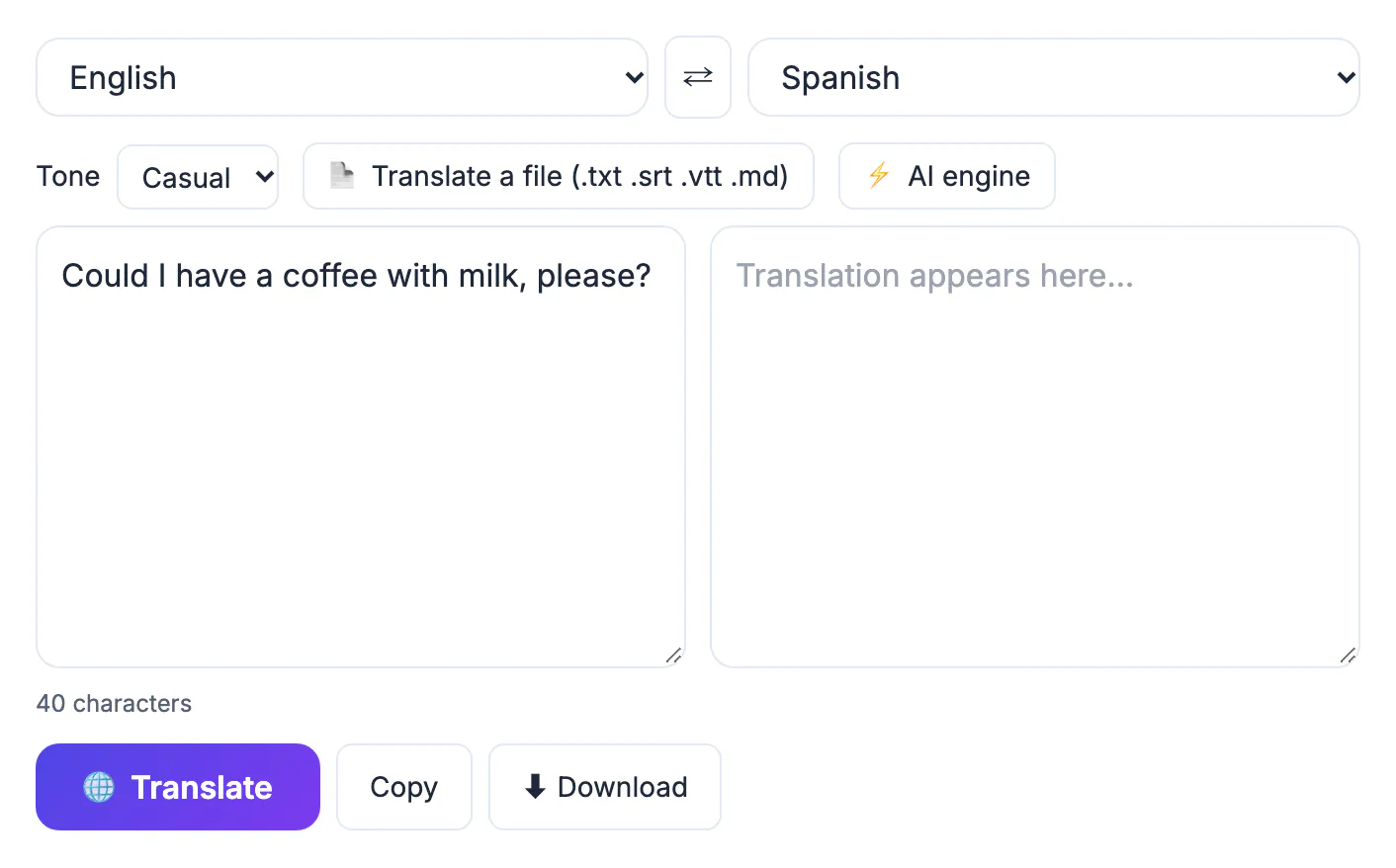
Single words translate easily but do not teach you how a language is put together. A whole phrase carries word order, endings and politeness, so each one you save is a small model sentence. Choosing phrases you need this week, like ordering a coffee or asking for directions, also gives you a reason to remember them.
A 15-minute routine to learn a language
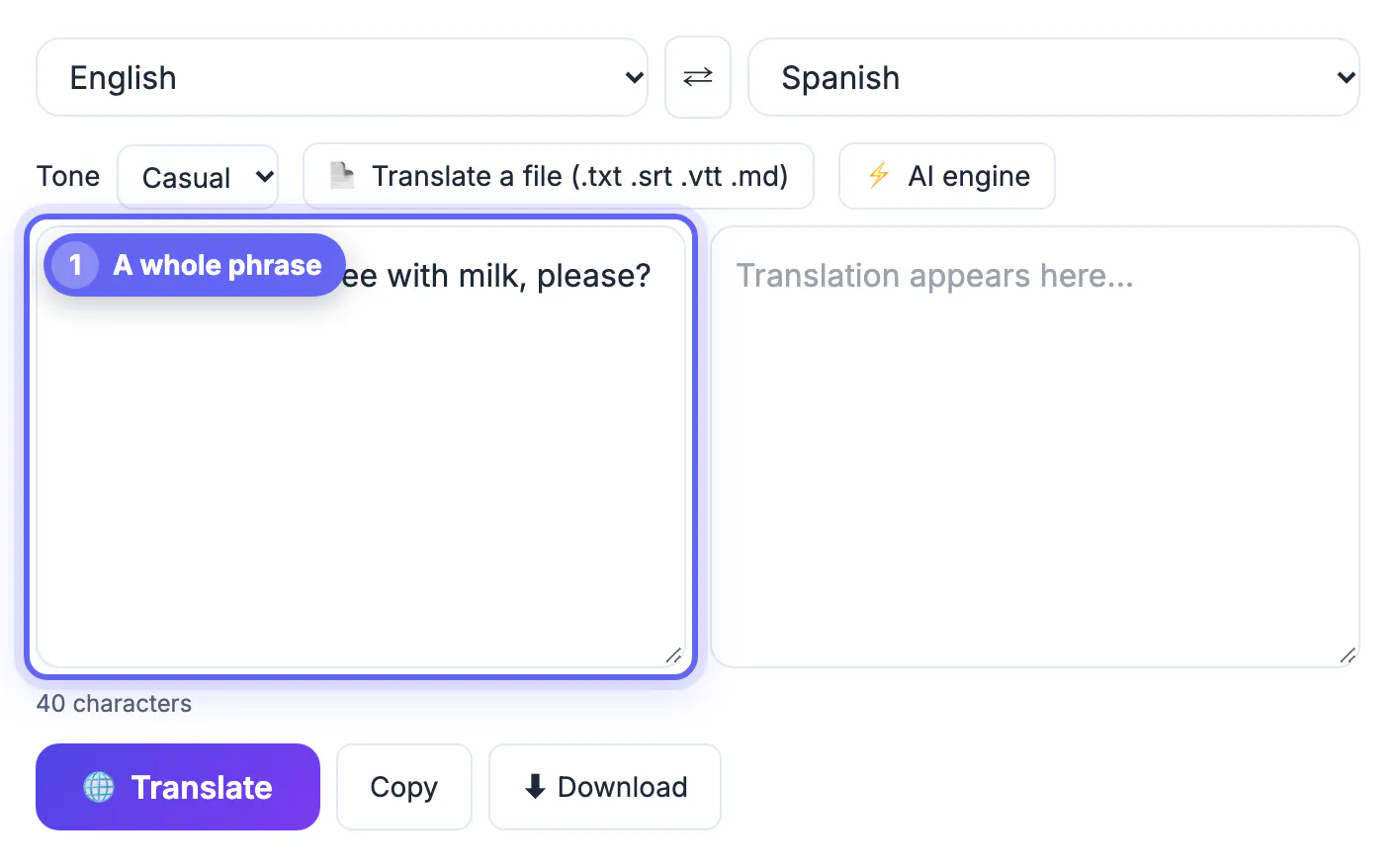
- Pick three phrases you need today and write them in English as complete sentences, such as Could I have a coffee with milk, please?
- Translate them with the AI Translator, set to your target language. Read the result aloud.
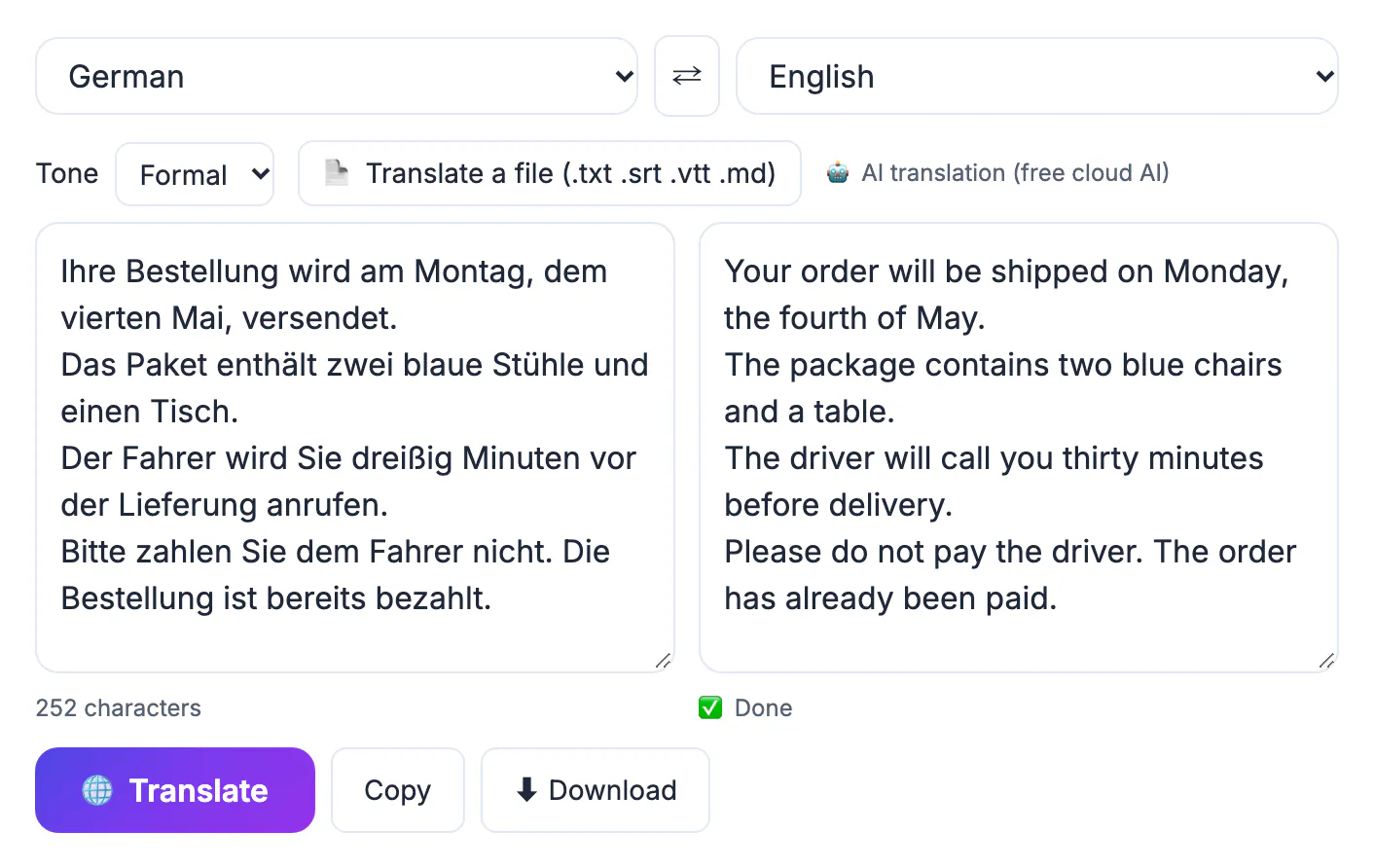
- Switch the tone between Casual and Formal and notice what changes: pronouns, verb endings, extra words.
- Translate back with the swap button. If the English comes back close to your original, the phrase is probably sound.
- Say it out loud three times, then use it with someone or record yourself.
- Review yesterday's phrases before you add new ones.
Ways AI helps, and where to be careful
Useful: translating phrases in context, asking the AI Writer to explain a grammar rule with examples, generating practice sentences with a word you are learning, and simplifying a short text to your level. Be careful with: unnatural phrasing, which machine output sometimes gives; regional differences, such as Spanish in Mexico and Spain; and over-simplified grammar explanations. When something matters, check it with a textbook, a teacher or a native speaker. The Free AI Translator guide and translating text accurately explain how to get better output.
Hear it, then say it
Reading a phrase is not enough. Text to Speech has 16 US and UK English voices, and for other languages it can use the voices built into your device, which depend on your system. Whatever you use, compare it with audio from native speakers. Pronunciation and rhythm come from listening and repeating, not from reading. Record a short voice note of yourself and listen back.
A simple weekly review
Once a week, spend ten minutes on your saved phrases. Hide the translation, read the English, and say the phrase from memory before you check it. Mark the ones you missed and keep only those for the next week. Add one new theme at a time, such as the cafe, the train station or small talk about the weather, so that phrases from the same situation reinforce each other. If a phrase felt too formal or too casual when you used it with a real person, note the tone that worked and try it in the translator again. This small loop of translate, say, check and review is what turns a list of phrases into something you can use without a screen.
Output is where you get fluent
AI is excellent for input and explanations, but you also need output: speaking and writing with feedback. Book a conversation with a tutor or language exchange partner, write a short daily journal entry and ask someone to correct it, and use the phrases from your list in real situations. The routine above prepares you so that those conversations are easier, and it is not a replacement for them.
Choosing phrases that matter to you
Vocabulary sticks when it connects to your life. Pick phrases from places you will actually go: ordering at a cafe, asking for directions, talking to a colleague or helping a child with homework. Write them as full sentences, add the situation in a few words and note who you would say it to. Over a month this builds a personal phrasebook that is far more useful than a generic list.
- Start with greetings, requests and questions.
- Add words you looked up during the week.
- Include polite and casual versions where the language differs.
- Remove phrases you know so the list stays short.
Related reading includes translating English to any language, translating text accurately with AI and text-to-speech voices for listening practice.
Tracking progress and staying motivated
Keep a simple log with the date, minutes spent and one thing you can now say. Set a small target, such as a five-minute conversation by the end of the month, and celebrate when you reach it. Missed a day? Resume without guilt, because consistency across weeks matters more than perfection on any single day.
Mistakes to avoid when practising with AI
Do not trust every answer. Ask for the reason behind a correction, cross-check unusual constructions in a dictionary and avoid copying whole paragraphs without understanding them. Mix in real sources such as songs, podcasts and short articles, and speak aloud even when nobody is listening. Output is what builds fluency.
Step-by-step

Common mistakes to avoid
Pro tips
Frequently asked questions
Can AI help me learn a language for free?
Yes. The AI Translator, the AI Writer and Text to Speech are free and make a useful study companion for phrases, explanations and pronunciation.
Can AI replace a teacher?
No. It is good for instant translation and explanations but cannot give you the speaking practice and feedback that real conversation provides.
Is the translation always natural?
Not always. Check important phrases with a teacher or native speaker, and use the Formal and Casual tones to see the difference.
How long should I study each day?
Fifteen focused minutes with three to five phrases, plus a few minutes of speaking, works better than an occasional long session.
Which language can I learn with it?
The AI Translator covers 35 languages, including Spanish, French, German, Japanese, Korean, Arabic and Hindi.
Use AI to prepare: translate whole phrases, compare tones, check by translating back and hear them aloud. Then use them with real people, because speaking is what makes a language stick.
Related guides
Browse more: all AI guides · AI Translator