How to Convert Feet to Meters (Formula + Quick Trick)
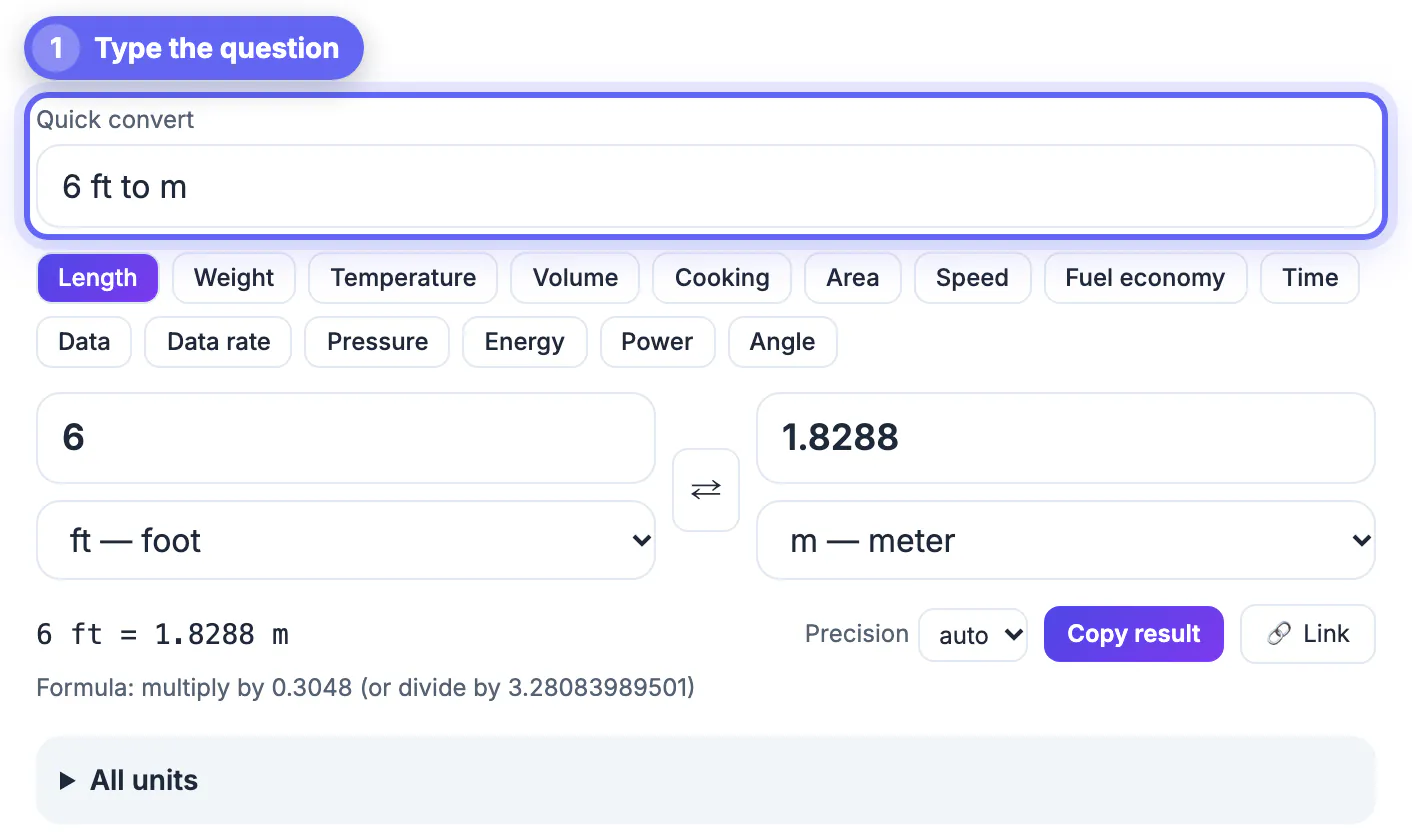
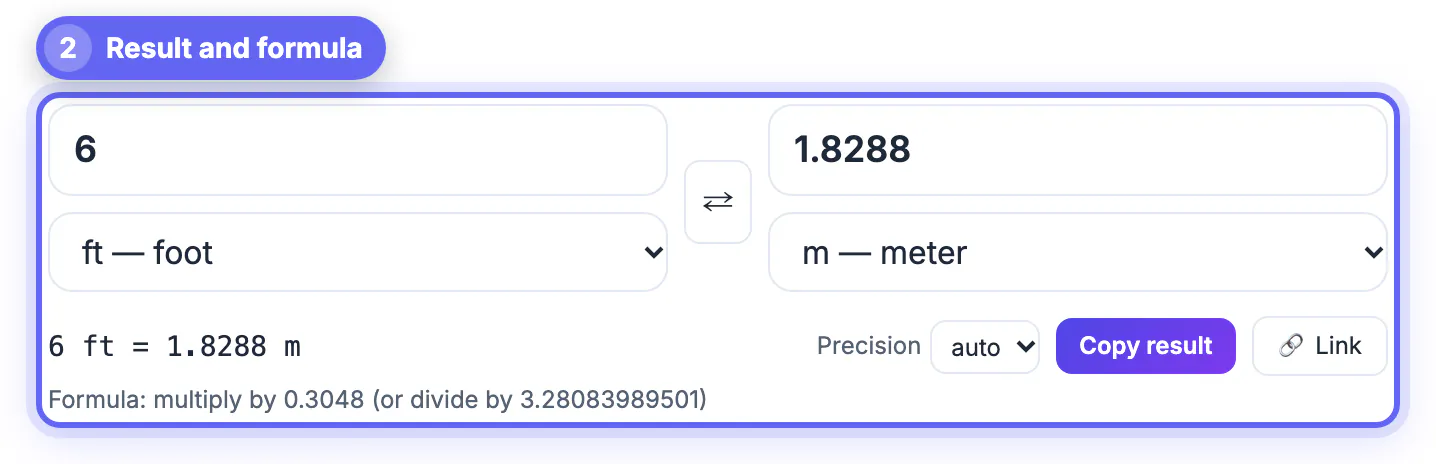
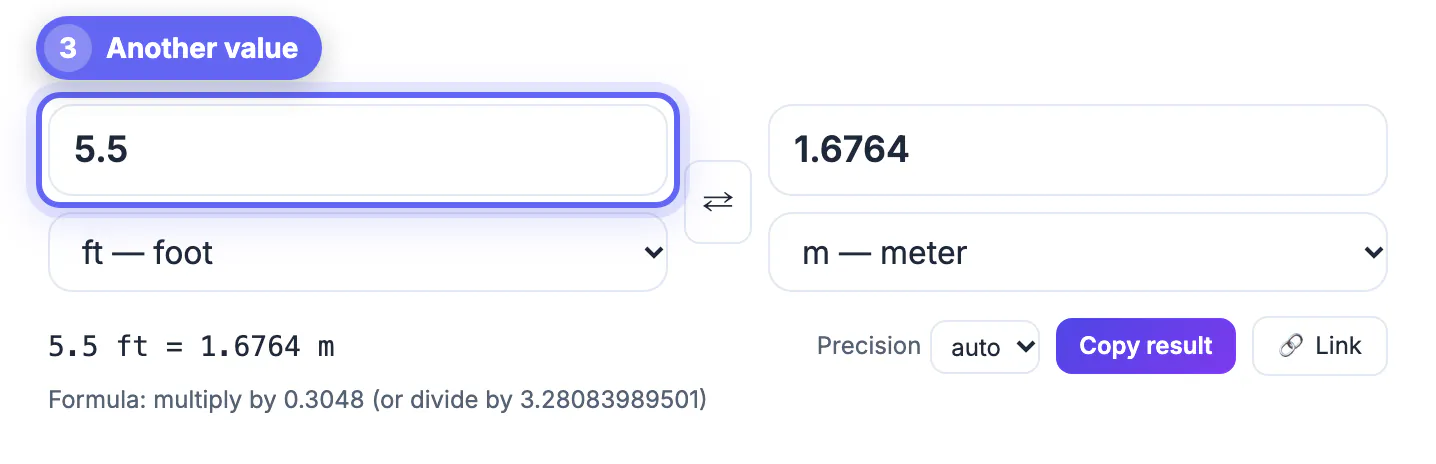
To convert feet to meters, multiply the feet by 0.3048. Six feet is 6 × 0.3048 = 1.8288 m, and a 5.5 ft ceiling clearance is 1.6764 m. The factor is exact because the foot is defined as 0.3048 meters, so any rounding is yours to choose. This guide covers the formula, how to handle feet and inches together (5 ft 11 in), a table of heights and room sizes, why feet and meters matter for altitude and building plans, and the steps in GrabCast's free Unit Converter with real screenshots.
📐 Try Unit Converter now — freeOpen →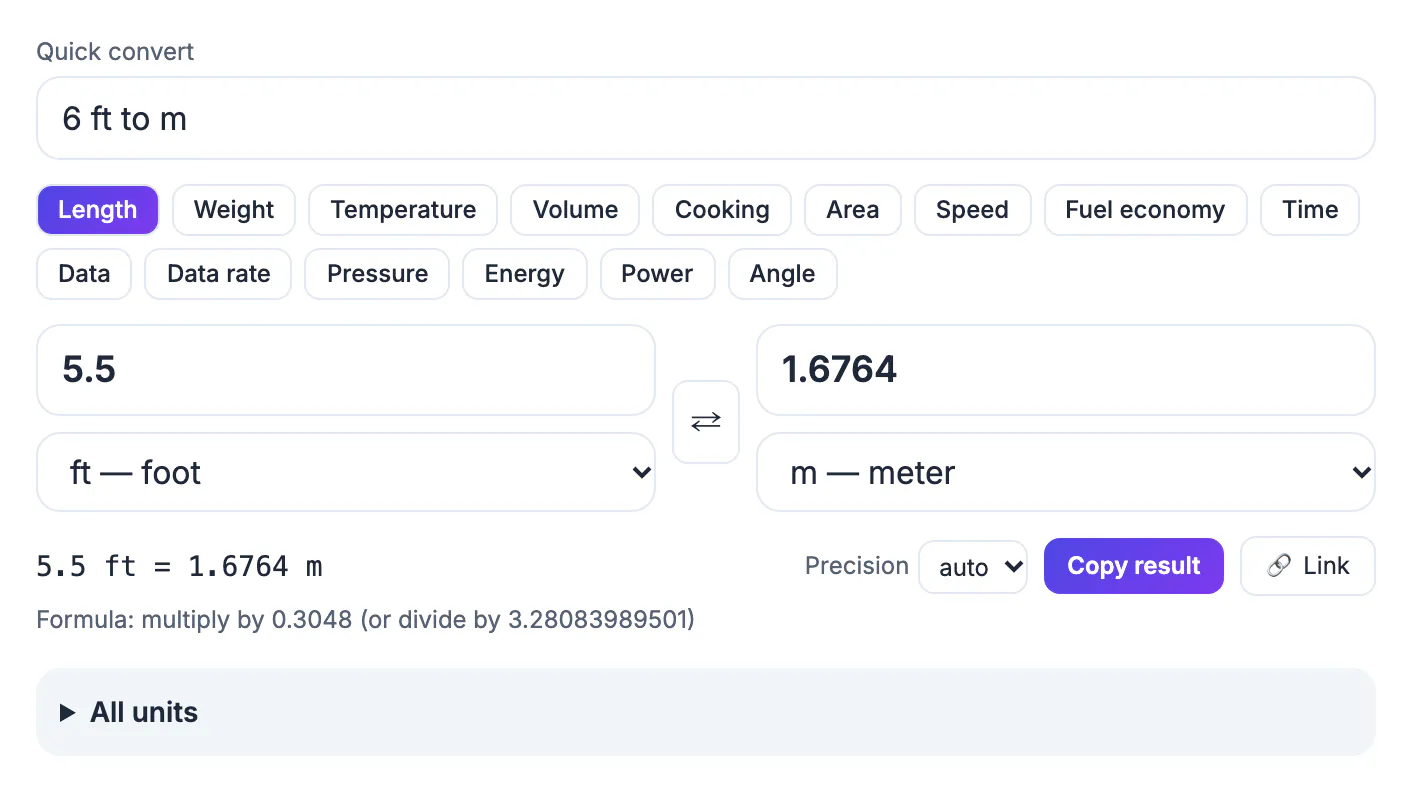
Height on a passport or a dating profile, room sizes on a US real-estate listing, a pool, a fence, a mountain elevation or an aircraft altitude: all of these are given in feet in some countries and meters in others. Because the numbers are larger than the small lengths in centimeters or inches, a small mistake in the factor shows up quickly: multiplying by 3.28 instead of 0.3048 gives an answer that is off by a factor of about ten.
The feet to meters formula
Use meters = feet × 0.3048. To go the other way, feet = meters × 3.28084, or divide meters by 0.3048. Because 0.3048 is exact, the result is exact until you round it.
Example: 6 ft × 0.3048 = 1.8288 m. A 20 ft container length is 6.096 m. A 100 ft field is 30.48 m.
Feet and inches together
Heights and room sizes are usually written like 5 ft 11 in. Convert in one of two ways. Either change everything to feet first (11 in is 11 ÷ 12 = 0.9167 ft, so the height is 5.9167 ft, or 1.8034 m), or change everything to inches (71 in × 0.0254 = 1.8034 m). Both give the same answer, about 1.80 m.
To go from meters to feet and inches, divide by 0.3048 for decimal feet, keep the whole feet and multiply the decimal part by 12 for inches: 1.75 m is 5.741 ft, which is 5 ft and 0.741 × 12 = 8.9 in.
Heights and distances worth knowing
Computed with the exact factor:
- 3 ft = 0.91 m
- 5.5 ft = 1.68 m
- 6 ft = 1.83 m (a tall adult)
- 6.5 ft = 1.98 m
- 10 ft = 3.05 m (a basketball hoop height)
- 100 ft = 30.48 m
- 1000 ft = 304.8 m
- 29029 ft = 8,848.04 m (the commonly quoted elevation of Mount Everest)
Standard US ceilings are 8 ft (2.44 m), and a typical door is 6 ft 8 in (2.03 m). Aircraft altitudes are still given in feet almost everywhere: 35,000 ft is about 10,668 m.
Common places conversions go wrong
The classic trap is the apostrophe: 5'11" means five feet eleven inches, not 5.11 ft. Typing 5.11 into the box gives 1.558 m, while the real height is 1.803 m. Convert the inches part separately, or use the decimal feet (5.9167).
The second is the survey foot. Some US land records still use the older U.S. survey foot, which differs from the international foot by about 2 parts per million, or 2 mm in 1 km. For everyday work you can ignore it, but for a land survey use the units on the deed.
A worked example: a room and a ladder
A 12 ft ladder is 12 × 0.3048 = 3.66 m long, which is why it will not stand upright in a room with a 2.44 m (8 ft) ceiling. For a rectangular room that is 12 ft by 14 ft, convert each side (3.66 m and 4.27 m) and then multiply for the area: 3.66 × 4.27 = 15.6 square meters. Do not convert square feet with the length factor; the area factor is 0.3048 squared, or 0.0929, so 168 sq ft is 15.6 m², the same result.
This is the safest habit for any calculation with mixed units: convert the lengths first, then do the multiplication.
Choosing the right level of accuracy
A height quoted for a passport or a form is normally given to the nearest centimeter, while a room dimension for a floor plan is usually fine to the nearest ten centimeters and a building plan may need millimeters. Decide the precision before you convert, and round only at the end, so that small errors do not add up across a long list of measurements.
If you are comparing listings from different countries, convert every dimension to the same unit before you compare them. It is surprisingly easy to prefer the larger-looking number simply because it was written in feet rather than meters, and a quick conversion removes that bias from the decision.
Where height and length figures come up
Travel, sport and property listings mix systems all the time. A runway of 10,000 ft is about 3,048 m, a swimming pool 25 yards long is 22.86 m, and a 1,200 sq ft flat is roughly 111.5 square metres. Square measures use the square of the factor, so multiply by 0.0929, not by 0.3048.
- Real estate: floor areas in square feet must use the squared factor.
- Aviation: altitude in feet is standard even in metric countries.
- Hiking: a 3,000 ft climb is roughly 914 m of elevation gain.
- Sport: a 6 ft 4 in basketball player is about 1.93 m.
Companion guides include changing gallons, ounces, tons and more for other measures, miles to kilometers for road distances, and inches to cm for short lengths.
A habit that prevents mistakes
Write the unit next to every number as you work, and check the answer against a familiar reference such as a door, which is about 2 m tall. If a person comes out at 18 m, you have moved a decimal point.
Practical checks before you rely on a figure
Whenever a number comes from a spec sheet, a listing or a measuring tape, take a moment to confirm what it describes. Ask whether it is a length, a height or a diagonal, whether it is rounded, and who measured it. Mixed sources are a frequent cause of mismatches: a builder's drawing may use millimetres, a catalogue may use inches, and a government form may want a figure to the nearest centimetre. Writing both versions next to each other on your notes, with the date and the source, saves arguments later and makes it easy for someone else to repeat your work.
For anything safety related, such as ladders, climbing gear, fall protection or load limits, use the figures published by the manufacturer and do not rely on rounded estimates.
Step-by-step
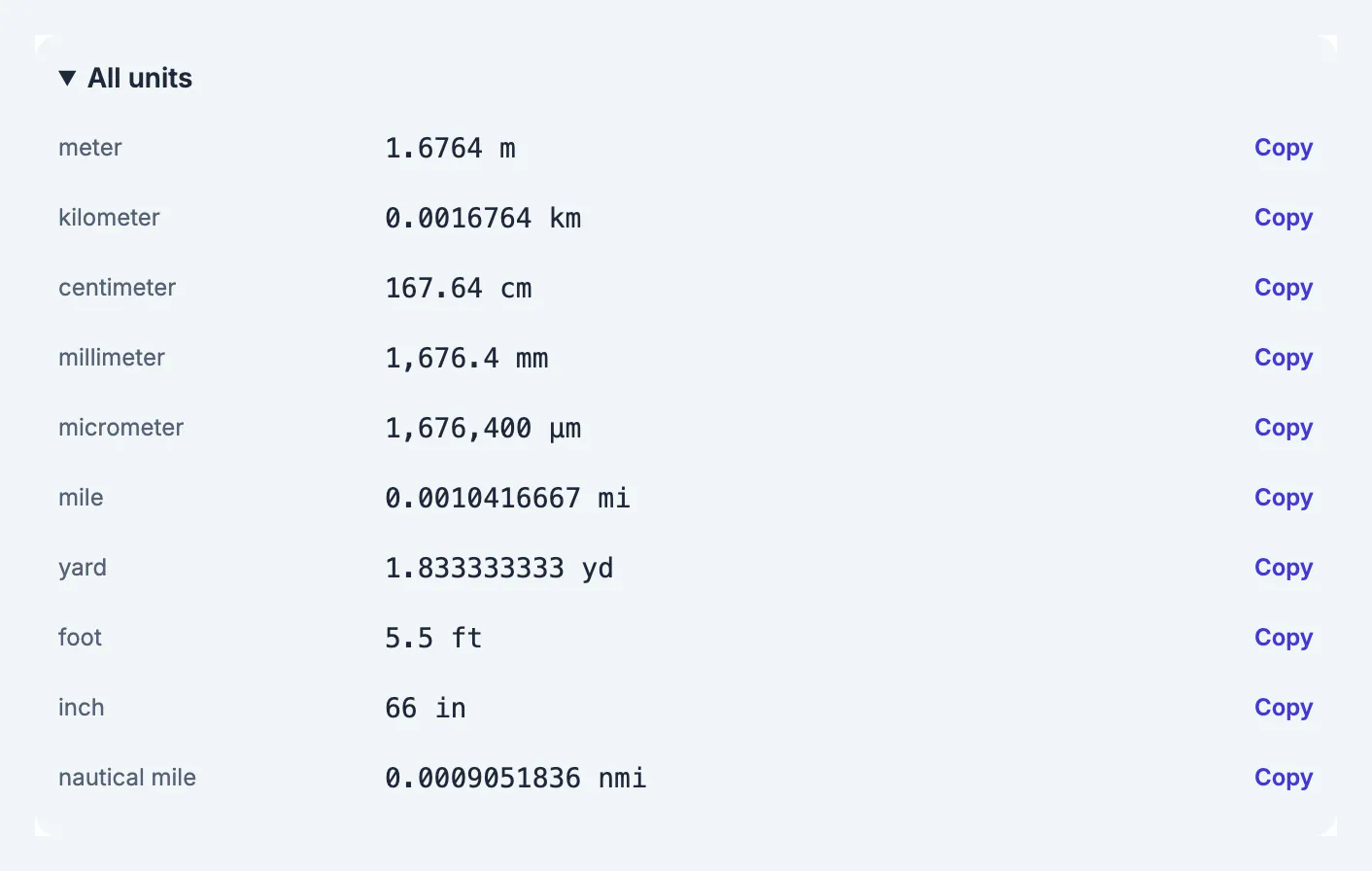
Common mistakes to avoid
Pro tips
Frequently asked questions
How many meters are in a foot?
One foot is exactly 0.3048 meters, or 30.48 centimeters.
What is 6 feet in meters?
Six feet is 1.8288 meters, about 1.83 m.
How do I convert feet and inches to meters?
Convert everything to inches (feet × 12 plus the inches) and multiply by 0.0254. Five feet eleven inches is 71 in, which is 1.8034 m.
How many feet is 1.75 m?
1.75 m is 5.741 ft, or about 5 ft 8.9 in.
Is there a difference between the international and survey foot?
Yes, a tiny one, about 2 mm per kilometer. The international foot (0.3048 m) is used in the converter and for everyday work.
Feet to meters is a multiplication by 0.3048. Split feet-and-inches values carefully, keep enough decimals for the job and let the converter show the factor so you can trust every result.
Related guides
Browse more: all calculator guides · Unit Converter